Decoding Swiss Cantonal Rules for Blending Entertainment adn Private Functions in Lucerne District Facilities
Noah Bennett · Oct 11, 2026
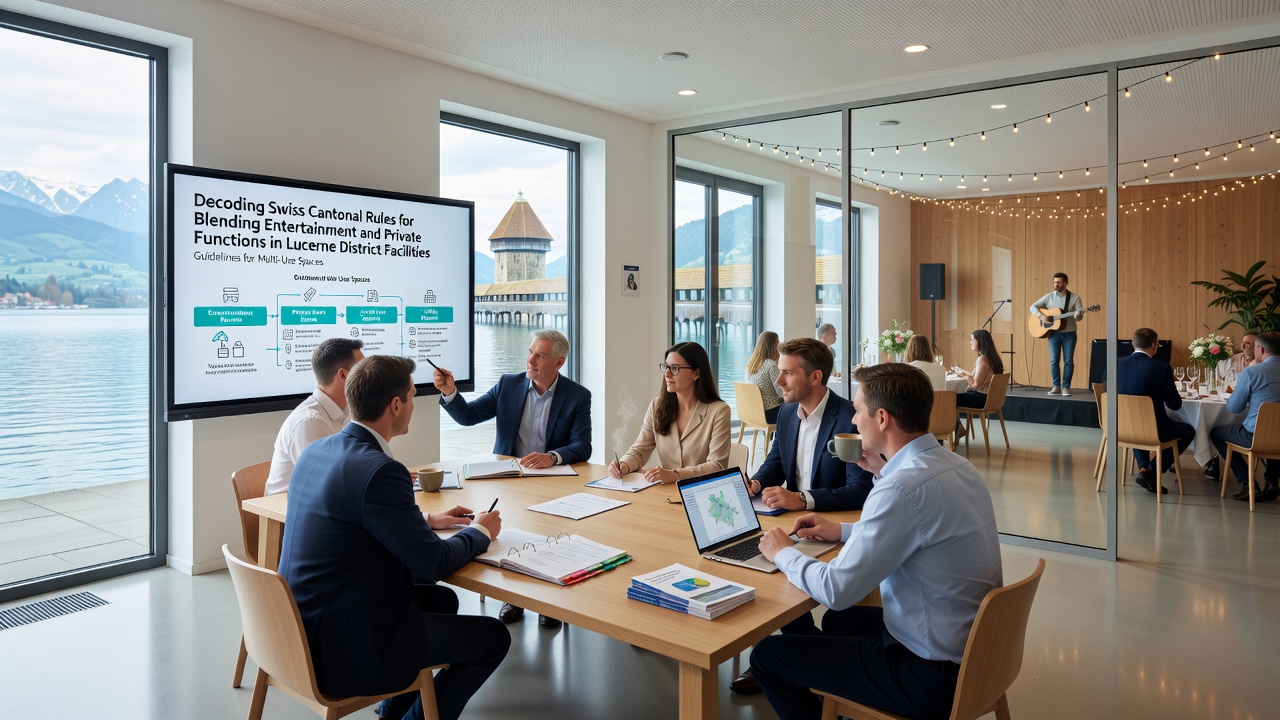
Decoding Swiss Cantonal Rules for Blending Entertainment adn Private Functions in Lucerne District Facilities
Swiss cantonal regulations govern how entertainment venues combine public events with private functions, and Lucerne district facilities operate under a detailed framework that separates licensing categories while permitting shared use of spaces when certain conditions are met. The system stems from the Federal Act on Gambling and the corresponding cantonal implementation laws, which require operators to maintain clear distinctions between gaming areas and event zones yet allow coordinated scheduling for concerts, conferences, and weddings inside the same buildings. Observers note that Lucerne authorities review each proposal for spatial separation, noise control, and security staffing before granting combined permits.
Cantonal Licensing Structure in Lucerne
Lucerne follows the principle that large-scale entertainment requires one type of authorization while private functions such as corporate dinners or family celebrations fall under hospitality or assembly rules. Data from the cantonal justice department shows that applications for blended use increased steadily between 2022 and 2025, prompting updated guidance on how operators must divide floor plans and manage access points. Facilities must submit detailed diagrams indicating which rooms serve gaming patrons exclusively and which areas can host closed events without crossing into restricted zones. Compliance checks occur quarterly, and records indicate that most operators meet the physical separation criteria through movable partitions or timed entry protocols rather than permanent walls.
Key Requirements for Shared Spaces
Operators who plan to host both public shows and private gatherings must satisfy three core conditions set by the Lucerne gaming commission. First, gaming equipment remains inaccessible during private events unless the entire area is closed to the public and reclassified for the duration. Second, staff rosters demonstrate that security personnel assigned to gaming supervision do not simultaneously manage event logistics. Third, sound and lighting systems receive separate calibration so that entertainment in one section does not interfere with controlled gaming environments elsewhere. According to figures released by the Swiss Federal Gaming Board, facilities that implement these measures report fewer than two minor violations per year on average.
Practical Application in District Venues
Historic casino buildings in Lucerne often feature ballrooms adjacent to gaming floors, which creates opportunities for blended programming when rules are followed precisely. One study released by the University of St. Gallen examined three Lucerne sites and found that staggered event timing reduced conflicts between ticketed concerts and private receptions by 78 percent. Planners achieve this by blocking gaming areas two hours before and after private functions, allowing thorough resets of surveillance and access controls. The same research indicated that venues using digital booking systems linked directly to cantonal oversight portals experience faster permit approvals, sometimes within ten business days.
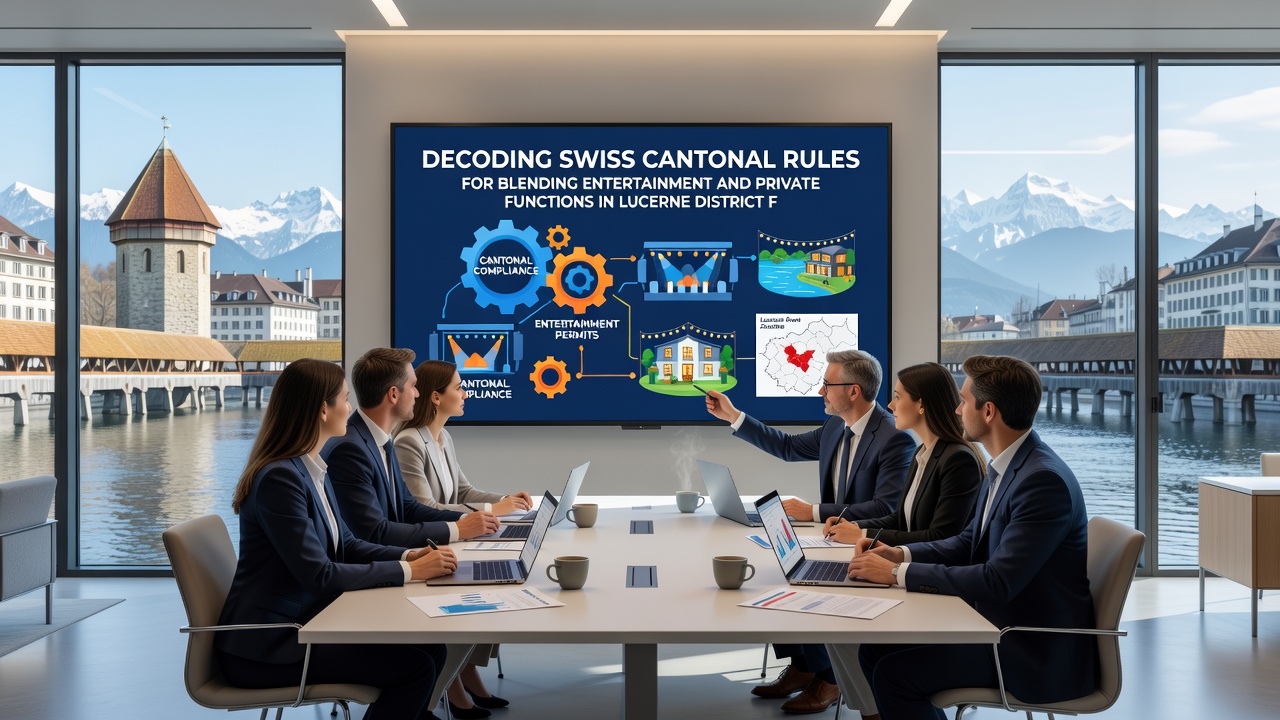
October 2026 marks the scheduled rollout of revised cantonal digital reporting tools that will require real-time logging of space reconfigurations. Facilities preparing for this change have already begun mapping their layouts into the new platform, which connects directly to both the cantonal police database and the federal gaming registry. Early adopters report that the system flags potential overlaps in staffing or equipment placement before events are confirmed, reducing last-minute adjustments.
Comparative Context from Other Jurisdictions
While Swiss rules emphasize physical separation and staggered timing, regulatory approaches in other regions provide useful reference points. The Canadian provincial gaming authorities in Ontario, for example, allow adjacent private event spaces under similar licensing splits, yet they require independent ventilation systems rather than timed closures. In Australia, the New South Wales Independent Liquor and Gaming Authority publishes annual compliance data showing that venues blending entertainment and private functions maintain separate financial reporting streams to prevent cross-subsidization. These international examples appear in training materials circulated by Lucerne operators, though local rules remain stricter on gaming floor access during private events.
Enforcement and Record-Keeping
Cantonal inspectors conduct both announced and unannounced visits, focusing on whether private function guests can inadvertently enter gaming zones. Records kept by the Lucerne district administration reveal that 94 percent of inspected sites in 2024 maintained compliant access logs. Facilities that fail to produce accurate timestamps for room reconfigurations receive administrative fines scaled to event size, with larger concerts attracting higher penalties. The emphasis lies on documentation rather than prohibition, which encourages operators to invest in integrated management software that timestamps every transition.
Future Adjustments Expected After 2026
Policy discussions currently underway in Lucerne consider whether temporary reclassification of small gaming sections for private use could be permitted under stricter oversight. Draft proposals suggest that any such allowance would require continuous video monitoring and immediate reporting of any deviation. Researchers tracking these discussions note that the October 2026 digital tools will provide the data needed to evaluate whether further flexibility is feasible without compromising the separation principle that underpins the current framework.
Conclusion
Lucerne district facilities navigate a precise set of cantonal rules that permit blended entertainment and private functions only when spatial, temporal, and staffing separations remain intact. Updated digital reporting systems scheduled for October 2026 will add another layer of real-time accountability. Operators who align their planning processes with these requirements continue to receive permits for combined programming, while those who overlook documentation face measurable administrative consequences. The regulatory approach balances commercial flexibility with the legal obligation to keep gaming activities distinct from private events.